Views: 0 Author: Site Editor Publish Time: 2026-05-23 Origin: Site
With the continuous development of industrial automation, various cabinet systems are now widely used in industries such as power distribution, telecommunications, new energy, rail transit, and automation control. During equipment operation, people often focus more on control systems, electrical components, and core functional modules. However, the stability of cabinet doors is equally important. As a critical structural component connecting the cabinet door and cabinet body, industrial hinges directly affect equipment safety, sealing performance, and long-term operational reliability.
In industrial environments, cabinet equipment often operates under complex conditions such as high temperatures, humidity, dust, vibration, and corrosion. At the same time, cabinet doors are frequently opened and closed during daily operation and maintenance.
If hinge quality is insufficient, long-term use may lead to loosening, rust, wear, or even structural failure. This can affect the normal operation of cabinet doors and increase maintenance costs over time.
Especially in large industrial cabinets, doors are often designed with reinforced panels, fireproof layers, insulation materials, or observation windows. Under these conditions, hinges with inadequate load-bearing capacity may eventually cause door sagging, poor closure, or structural deformation. As a result, more equipment manufacturers are adopting heavy-duty industrial hinges to improve long-term cabinet door stability.
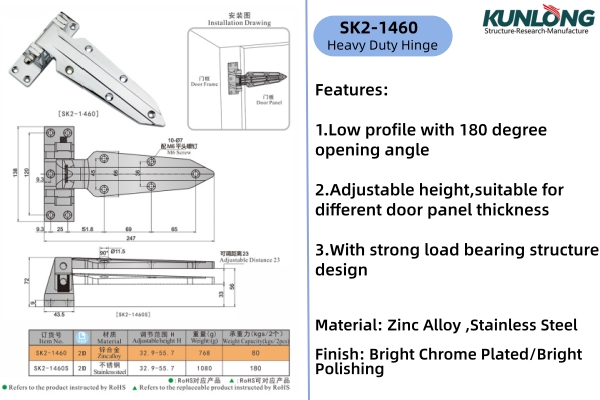
For industrial equipment, cabinet door sealing performance is also extremely important. If hinge stability is poor, cabinet doors may become misaligned or develop uneven gaps, allowing dust, moisture, and other contaminants to enter the enclosure.
This can negatively affect the stable operation of electrical components and even increase the risk of equipment failure.
Therefore, high-quality industrial hinges are not only related to structural stability, but also directly influence the overall protection performance of equipment. This is especially critical for outdoor cabinets, power equipment, and automation control systems where long-term reliability is essential.
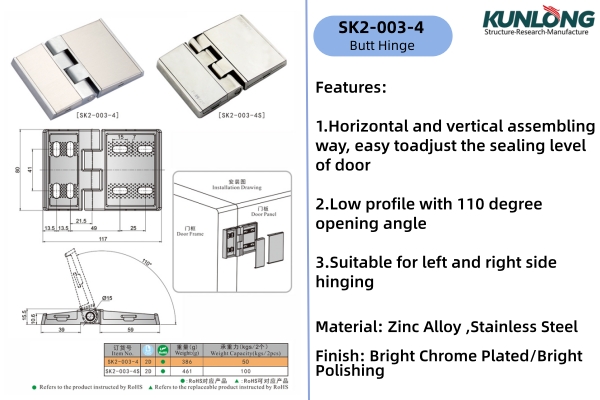
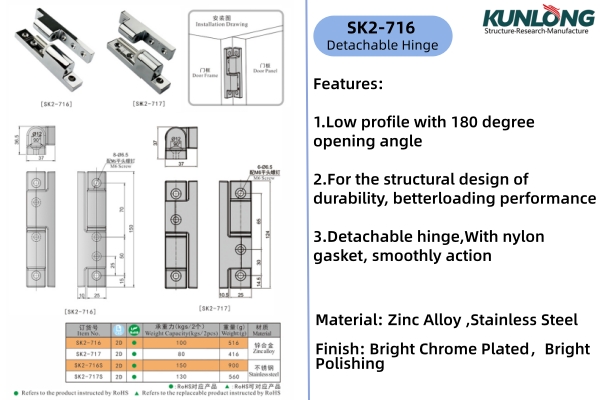
In large equipment systems or cabinets that require frequent maintenance, detachable hinges are becoming increasingly popular among equipment manufacturers.
Compared with traditional fixed structures, detachable hinge designs allow cabinet doors to be removed and reinstalled quickly, making inspection, maintenance, and repairs more convenient.
For automation equipment, electrical control cabinets, and large industrial enclosure systems, this structure not only improves installation efficiency but also reduces maintenance time and simplifies on-site operations, ultimately enhancing overall service convenience.
In addition to structural design, hinge materials are also receiving more attention across industries.
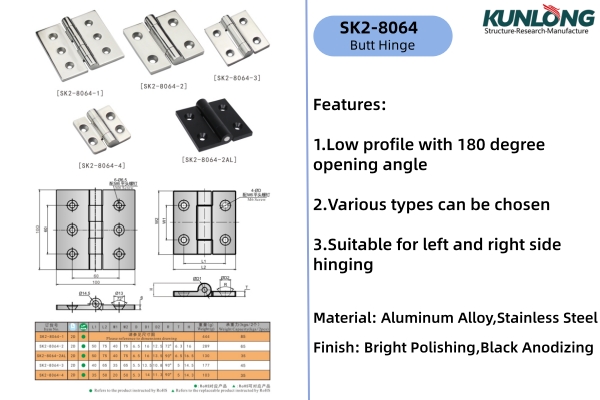
Compared with ordinary steel, stainless steel industrial hinges provide superior rust resistance and corrosion resistance, making them more suitable for humid environments, outdoor applications, and harsh industrial conditions.
For industrial equipment that requires continuous long-term operation, corrosion-resistant hinges can effectively extend equipment lifespan, reduce maintenance frequency, and lower overall operating costs.
As industrial equipment continues to move toward smarter and more reliable designs, manufacturers are placing greater emphasis on structural details.
Although industrial hinges may seem like simple hardware components, their performance directly affects equipment safety, structural stability, and long-term operational reliability.
For modern industrial equipment, selecting the right industrial hinge solution has become an important part of improving product quality and user experience.