
Why Enclosure Hardware Belongs in the Engineering Review
Generator canopies, switchgear cabinets, control panels and outdoor power enclosures are exposed to vibration, rain, dust, thermal cycling, repeated maintenance access and, in coastal projects, chloride contamination. A door assembly can meet its dimensional drawing and still fail in service if the hinge loses alignment, the latch does not provide enough gasket compression, or the locking points loosen under continuous excitation.
For this reason, procurement should evaluate hardware against the same design inputs used for the enclosure itself: door mass, panel construction, gasket geometry, opening cycle, installation environment, required corrosion resistance and the allowable assembly tolerance. The objective is not simply to find a lower purchase price. It is to identify a qualified, repeatable and commercially competitive source with clear technical documentation and stable production control.
For international projects, the relevant message is value without a compromise in engineering discipline: documented materials, controlled manufacturing, consistent inspection and a clear route for sample approval, first-article verification and production supply.
Selection principle: specify the complete door system, not an isolated part. Hinge load, latch position, handle operation, gasket compression and cabinet tolerances should be checked together before production. Compare function, materials, interface dimensions, inspection records and sample performance—not appearance alone.
Four Hardware Solutions for Power Generation Applications
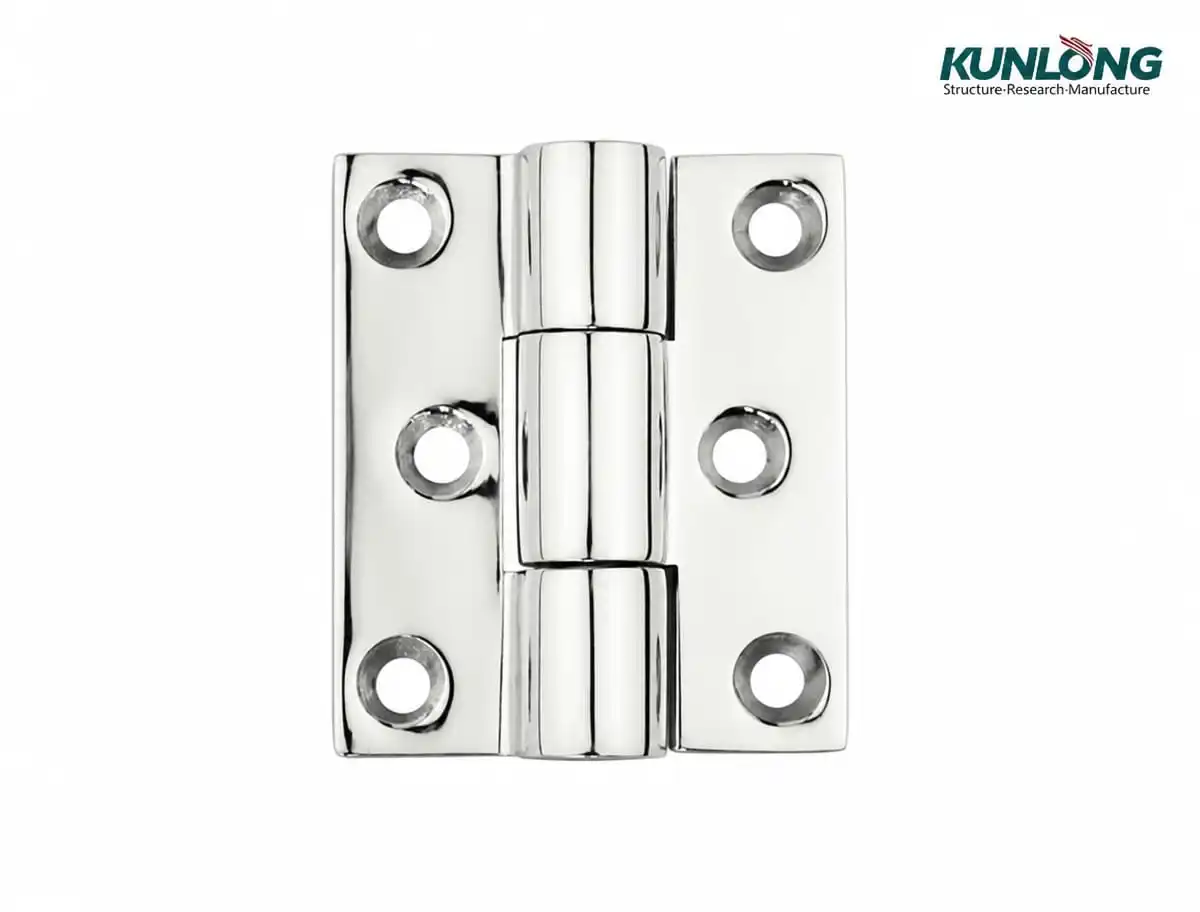
SK2-6880S Stainless Steel Heavy-Duty Hinge
Generator canopy doors and weatherproof enclosure panels can be heavy, especially when acoustic materials, insulation and sealing gaskets are included. The SK2-6880S uses a low-profile form with a 180-degree opening angle, allowing service access without creating unnecessary interference around the enclosure.
Its SUS304 stainless-steel solid casting and left- or right-hinging configuration are relevant when the project requires corrosion-aware material selection and flexible door orientation. Welded installation can be customized for specific enclosure constructions, but the final hinge quantity and spacing should be confirmed against the complete door mass and center of gravity.
Procurement review: verify hinge material, mounting pattern, door load, opening angle, hinge spacing and the effect of acoustic lining on the door center of gravity before approving the hardware for production.
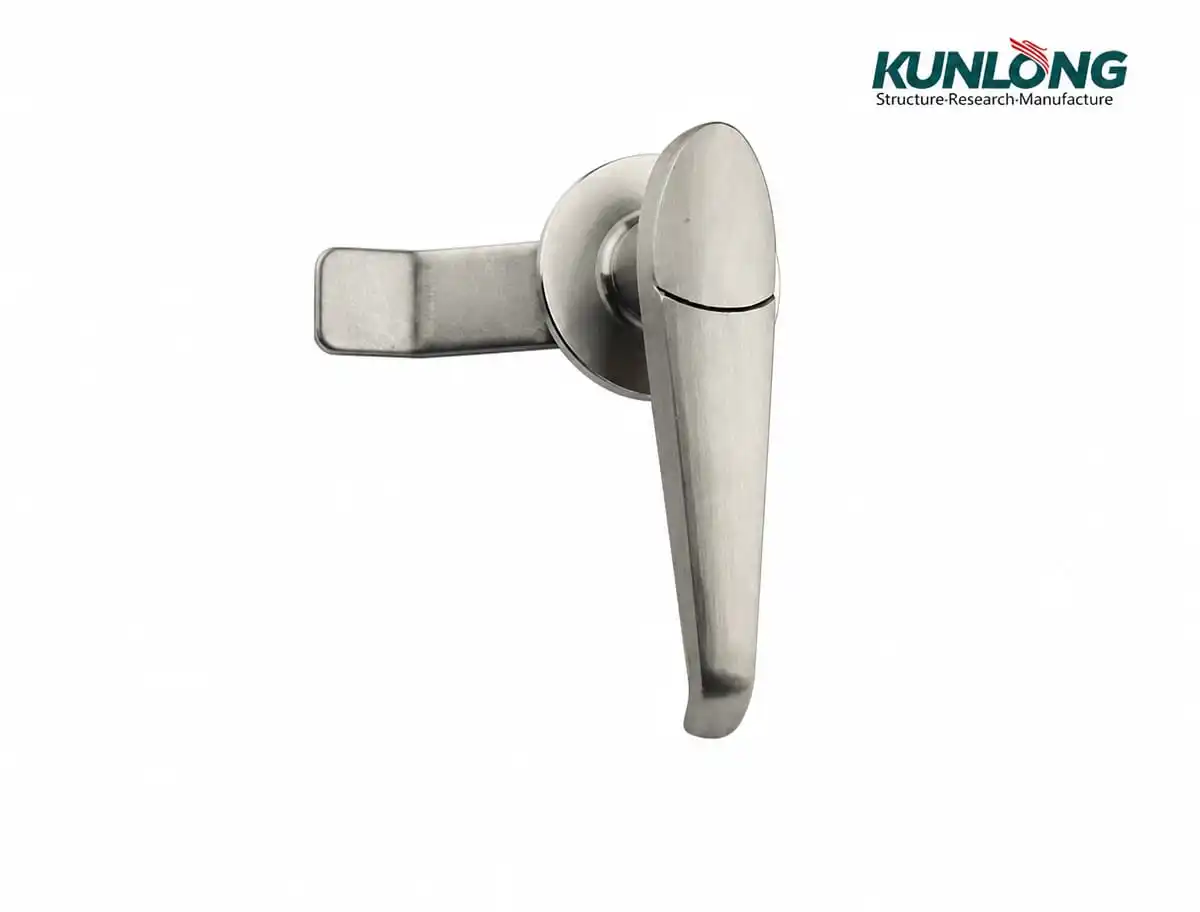
SK1-317S Stainless Steel Compression Handle Lock
Closing a cabinet door is not the same as compressing its gasket. The SK1-317S is positioned for high-end power boxes, control boxes, automation equipment and other cabinets that require a stable locking force in demanding environments.
The SUS304 stainless-steel construction and dust-proof key cover support a corrosion-aware design approach for outdoor equipment. The lock should still be evaluated together with the gasket hardness, keeper geometry and required compression travel; a hardware material alone does not establish an enclosure IP rating.
Procurement review: review interface dimensions, locking force, key access, surface condition, corrosion requirements and repeatability across the approved sample batch.
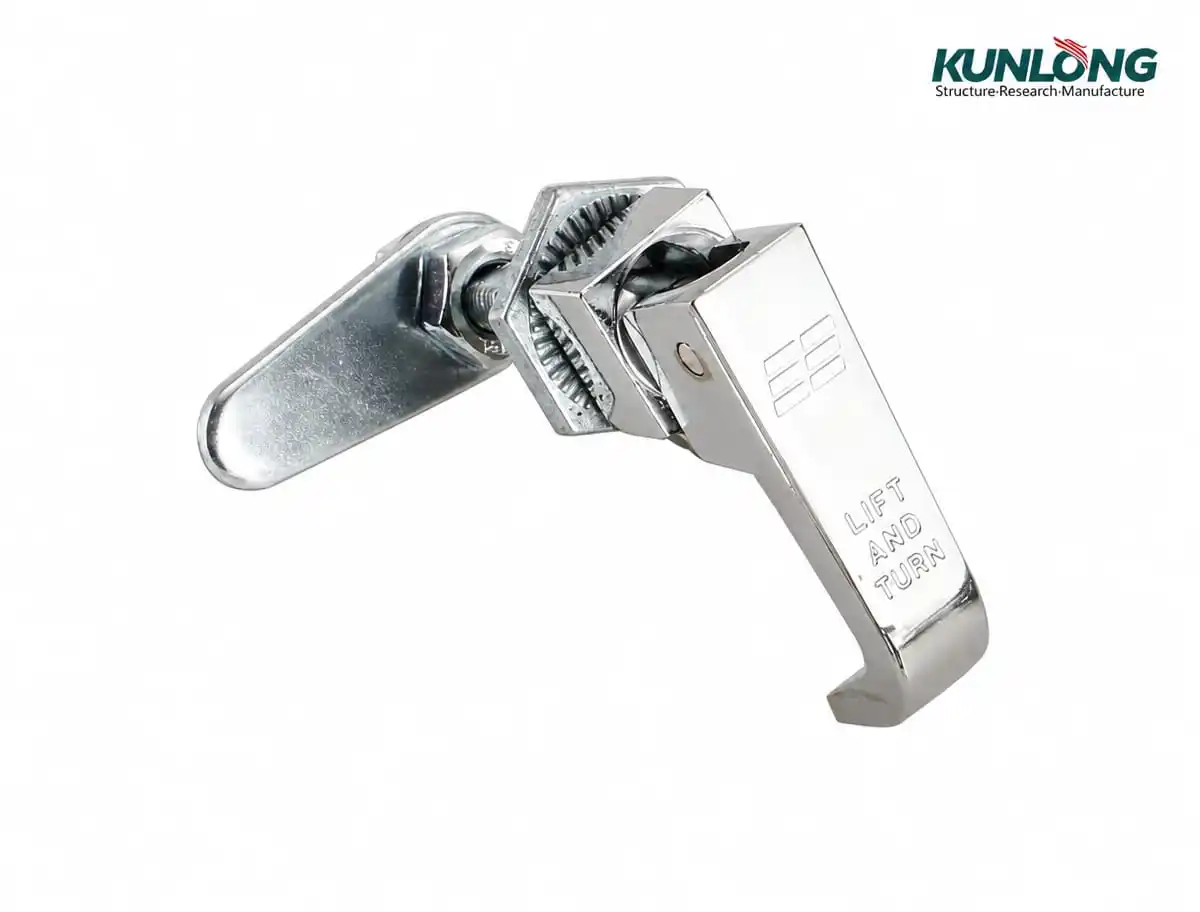
SK1-071 Electrical Panel Swing Handle Latch
Distribution and control cabinet doors are opened frequently during inspection and maintenance. The SK1-071 combines a swing-handle format with strong flex and compression force, giving operators clear feedback when the door is opened or closed.
The adjustable pawl accommodates different door thicknesses, and the left- or right-side opening configuration supports a range of cabinet layouts. For an engineered cabinet, the important interface is the relationship between the pawl, door thickness, frame return and gasket. The selected finish should also be assessed against the installation environment and the project cleaning procedure.
Procurement review: confirm door-thickness range, pawl adjustment, handle clearance, operating torque, locking-point arrangement and compatibility with gloves or planned maintenance procedures.
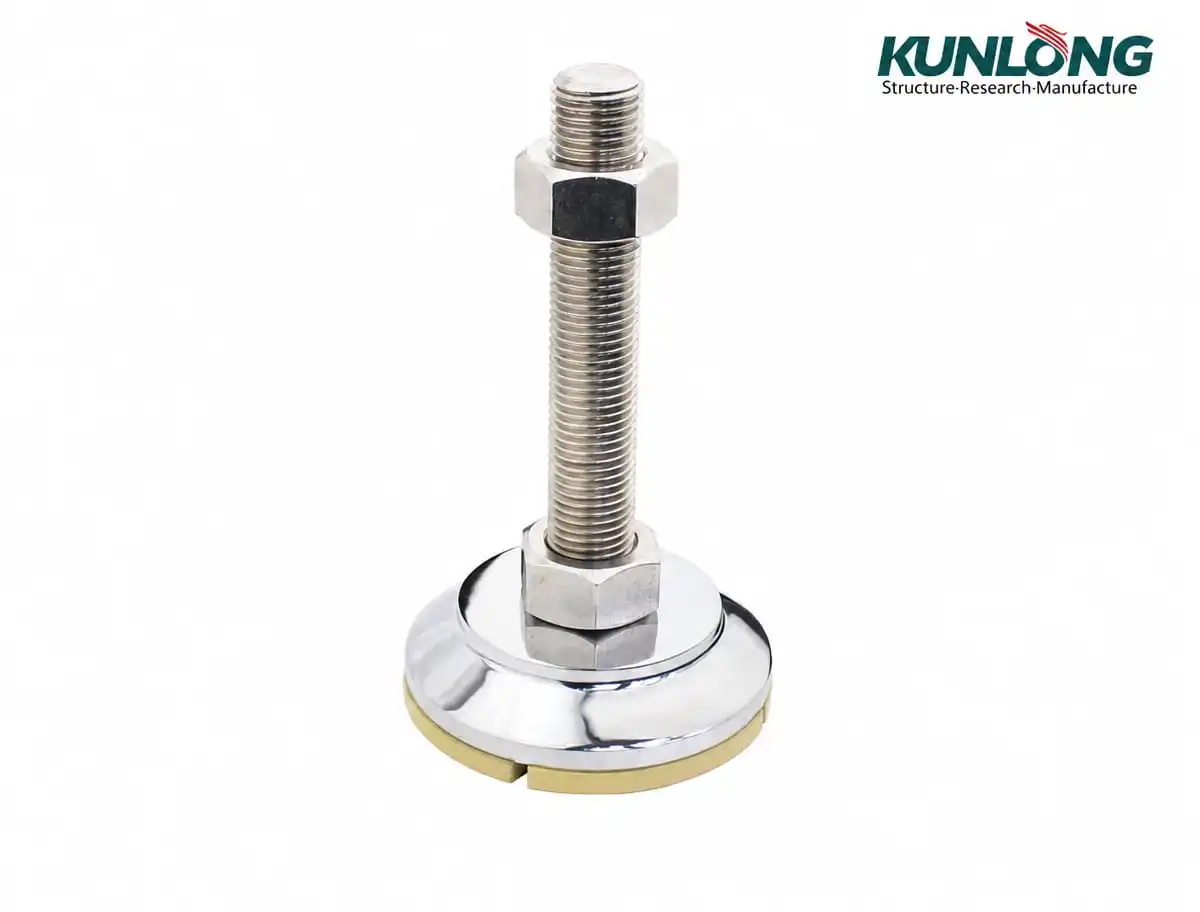
FT-T140 Heavy-Duty Adjustable Leveling Foot
Door reliability also depends on the stability of the equipment base. The FT-T140 combines a cast-steel structure with an anti-vibration rubber pad, helping large equipment remain level on uneven installation surfaces.
Its large contact area supports load-bearing applications, while the rubber pad provides non-slip and vibration-reduction benefits without damaging the floor. For generator and outdoor power equipment projects, the final quantity, static load distribution and adjustment range should be checked against the complete machine weight, center of gravity and foundation conditions.
Procurement review: confirm thread size, adjustment range, allowable load, rubber-pad material, floor interface and the required quantity for the actual equipment base.
How to Build a More Reliable Enclosure Door
A practical specification review can follow four steps:
- Define the door conditions: record door size, panel weight, gasket profile, opening angle, installation orientation and expected service frequency.
- Match the hinge to the load: account for the complete door leaf, including acoustic lining, seals and attached hardware.
- Match the latch to the seal: choose a compression solution when the enclosure depends on gasket pressure for dust and water resistance.
- Check the environment: review corrosion exposure, vibration, cleaning method and whether the equipment will be installed inland, coastal or offshore.
How to Qualify High-Performance Hardware for Production Use
For buyers in Europe, North America, Japan and South Korea, a competitive unit price must be considered together with technical fit, qualification history and field-service requirements. A disciplined review can be organized as follows:
- Freeze the functional specification: define the required load, compression behavior, opening angle, operating force, cycle expectation, corrosion environment, finish and installation method.
- Compare the interface before comparing the price: check mounting holes, cut-out dimensions, door thickness range, keeper or pawl geometry, thread size and the available adjustment range.
- Approve samples on the actual enclosure: install the proposed hardware on the real panel construction and record fit, alignment, gasket compression, access clearance and operating feel.
- Verify production controls: request material identification, surface-finish definition, inspection points, drawing revision control, packaging method and a process for handling non-conforming parts.
- Evaluate total cost of ownership: include rework, installation time, spare-part availability, corrosion-related maintenance and the cost of changing the enclosure interface—not only the quoted piece price.
This approach allows an international buyer to evaluate an industrial hardware source on evidence and repeatability. When the functional requirements and validation criteria are clear, a competitive supplier can deliver strong engineering value, stable quality and a lower total cost of ownership while maintaining the required qualification discipline.
| Power equipment area | Main requirement | Suitable hardware direction |
|---|---|---|
| Generator canopy | Support a heavy door and maintain alignment | Heavy-duty hinge with a compression handle lock |
| Outdoor power cabinet | Protect the gasket and resist weather exposure | Stainless-steel compression latch or handle lock |
| Distribution cabinet | Frequent access with secure closure | Adjustable swing handle latch and industrial hinge |
| Equipment base | Leveling and vibration management | Heavy-duty adjustable leveling feet with anti-vibration rubber |
Designed for OEM Integration and Repeatable Supply
Power-generation equipment is rarely built around a one-size-fits-all door. Mounting patterns, panel thickness, opening direction, surface finish and environmental requirements can vary from one project to the next. A coordinated hardware review helps reduce late-stage modifications and keeps the door system consistent from prototype to production.
For engineering procurement teams, the practical questions are straightforward: Can the supplier read and protect a controlled drawing? Can the proposed part be sampled on the real enclosure? Can material, finish and inspection requirements be repeated across production batches? Can the supplier support engineering changes without forcing an unplanned redesign?
Explore the related new energy and environmental protection equipment solutions, or review the complete industrial hardware product range.
References
- IEC 60529, Degrees of Protection Provided by Enclosures (IP Code). International Electrotechnical Commission. IEC IP ratings guide
- UL 9540, Energy Storage Systems and Equipment. UL Solutions. UL energy storage certification resource
- National Renewable Energy Laboratory, Thermal Management of Battery Energy Storage Systems. NREL. NREL official website
- IEC 61982, Secondary Batteries for the Propulsion of Electric Road Vehicles. International Electrotechnical Commission. IEC 61982:2012 publication page
- T/CIEP, Technical Specification for Liquid-Cooled Energy Storage Systems. China Association for Standardization information platform. T/CIEP standards information platform
- ISO 9227, Corrosion Tests in Artificial Atmospheres — Salt Spray Tests. International Organization for Standardization. ISO 9227 online browsing platform